Search This Blog

Sunday, 11 March 2012

Fitter, leaner in half the time

High Intensity Interval Training (HIIT)
5x Less Effective than Steady State Cardio???

By Tom Venuto, natural bodybuilder and author of Burn the Fat, Feed the Muscle
High Intensity Interval Training, or HIIT for short, has been promoted as one of the most effective training methods ever to come down the pike, both for fat loss and for cardiovascular fitness.
One of the most popular claims for high intensity interval training is that it burns “9 times more fat” than conventional (steady state) cardio. This figure was extracted from a study performed by Angelo Tremblay at Laval University in 1994. But what if I told you that high intensity interval training has never been proven to be 9 times more effective than regular cardio… What if I told you that the same study actually shows that high intensity interval training is 5 times less effective than steady state cardio??? Read on and see the proof for yourself.
In 1994, a study was published in the scientific journal Metabolism by Angelo Tremblay and his team from the Physical Activity Sciences Laboratory at Laval University in Quebec, Canada. Based on the results of this study, you hear personal trainers across the globe claiming that “HIIT burns 9 times more fat than steady state cardio.”
This claim has often been interpreted by the not so scientifically literate public as meaning something like this: If you burned 3 pounds of fat in 15 weeks on steady state cardio, you would now burn 27 pounds of fat in 15 weeks (3 lbs X 9 times better = 27 lbs).
Although it’s usually not stated as such, frankly, I think this is what some trainers want you to believe, because the programs that some trainers promote are based on convincing you of the vast superiority of high intensity interval training and the “uselessness” of low intensity exercise.
Indeed, higher intensity exercise is more effective and time efficient than lower intensity exercise. The question is, how much more effective? There’s no evidence that the “9 times more fat loss” claim is true outside the specific context in which it was mentioned in this study.
In order to get to the bottom of this, you have to read the full text of the research paper and you have to look very closely at the results.
13 men and 14 women age 18 to 32 started the study. They were broken into two groups, a high intensity interval training program (HIIT) and a steady state training program which they referred to as endurance training (ET).
The ET group completed a 20 week steady state aerobic training program on a cycle ergometer 4 times a week for 30 minutes, later progressing to 5 times per week for 45 minutes. The initial intensity was 60% of maximal heart rate reserve, later increasing to 85%.
The high intensity interval training group performed 25-30 minutes of continuous exercise at 70% of maximal heart rate reserve and they also progressively added 35 long and short interval training sessions over a period of 15 weeks. Short work intervals started at 10 then 15 bouts of 15 seconds, increasing to 30 seconds. Long intervals started at 5 bouts of 60 seconds, increasing to 90 seconds. Intensity and duration were progressively increased over the 15 week period.
The results: 3 times greater fat loss in the high intensity interval training group
Even though the energy cost of the exercise performed in the ET group was twice as high as the HIIT group, the sum of the skinfolds (which reflects subcutaneous body fat) in the HIIT group was three times lower than the ET group.
So where did the “9 times greater fat loss” claim come from?
Well, there was a difference in energy cost between groups, so in order to show a comparison of fat loss relative to energy cost, Tremblay wrote,
“It appeared reasonable to correct changes in subcutaneous fat for the total cost of training. This was performed by expressing changes in subcutaneous skinfolds per megajoule of energy expended in each program.”
Translation: The subjects did not lose 9 times more body fat, in absolute terms. But hey, 3 times more fat loss? You’ll gladly take that, right?
Well hold on, because there’s more. Did you know that in this oft-quoted study, neither group lost much weight? In fact, if you look at the charts, you can see that the HIIT group lost 0.1 kg (63.9 kg before, 63.8 kg after). Yes, the HIIT group lost a whopping 100 grams of weight in 15 weeks!
The ET group lost 0.5 kilograms (60.6 kg before, 60.1 kg after).
Naturally, lack of weight loss while skinfolds decrease could simply mean that body composition improved (lean mass increased), but I think it’s important to highlight the fact that the research study from which the “9 times more fat” claim was derived did not result in ANY significant weight loss after 15 weeks.
Based on these results, if I wanted to manipulate statistics to promote steady state cardio, I could go around telling people, “Research study says steady state cardio (endurance training) results in 5 times more weight loss than high intensity interval training!” Or the reverse, “Clinical trial proves that high intensity interval training is 5 times less effective than steady state cardio!”
Mind you, THIS IS THE SAME STUDY THAT IS MOST OFTEN QUOTED TO SUPPORT HIIT!
If I said 5 X greater weight loss with steady state, I would be telling the truth, wouldn’t I? (100 grams of weight loss vs 500 grams?) Of course, that would be misleading because the weight loss was hardly significant in either group and because interval training IS highly effective. I’m simply being a little facetious in order to make a point: Be careful with statistics. I have seen statistical manipulation used many times in other contexts to deceive unsuspecting consumers.
For example, advertisements for a popular fat burner claim that use of their supplement resulted in twice as much fat loss, based on scientific research. The claim was true. Of course, in the ad, they forget to tell you that after six months, the control group lost no weight, while the supplement group lost only 1.0 kilo. Whoop de doo! ONE KILO of weight loss after going through a six month supply of this “miracle fat burner!”
But I digress…
Back to the HIIT story – there’s even more to it.
In the ET group, there were some funky skinfold and circumference measurements. ALL of the skinfold measurements in the ET group either stayed the same or went down except the calf measurement, which went up.
The girths and skinfold measurements in the limbs went down in the HIIT group, but there wasn’t much difference between HIIT and ET in the trunk skinfolds. These facts are all very easy to miss. I didn’t even notice it myself until exercise physiologist Christian Finn pointed it out to me. Christian said,
“When you look at the changes in the three skinfold measurements taken from the trunk, there wasn’t that much difference between the steady state group (-6.3mm) and the HIIT group (-8.7 mm). So, much of the difference in subcutaneous fat loss between the groups wasn’t because the HIIT group lost more fat, but because the steady state group actually gained fat around the calf muscles. We shouldn’t discount simple measurement error as an explanation for these rather odd results.”
Christian also pointed out that the two test groups were not evenly matched for body composition at the beginning of the study. At the beginning of the study, the starting body fat based on skinfolds in the HIIT group was nearly 20% higher than the ET group. He concluded:
“So while this study is interesting, weaknesses in the methods used to track changes in body composition mean that we should treat the results and conclusions with some caution.”
One beneficial aspect of HIIT that most trainers forget to mention is that HIIT may actually suppress your appetite, while steady state cardio might increase appetite. In a study such as this, however, that can skew the results. If energy intake were not controlled, then some of the greater fat loss in the HIIT group could be due to lowered caloric intake.
Last but not least, I’d like to highlight the words of the researchers themselves in the conclusion of the paper, which confirms the effectiveness of HIIT, but also helps put it in perspective a bit:
“For a given level of energy expenditure, a high intensity training program induces a greater loss of subcutaneous fat compared with a training program of moderate intensity.”
“It is obvious that high intensity exercise cannot be prescribed for individuals at risk for health problems or for obese people who are not used to exercise. In these cases, the most prudent course remains a low intensity exercise program with a progressive increase in duration and frequency of sessions.”
In conclusion, my intention in writing this article wasn’t to be controversial, to be a smart-alec or to criticize high intensity interval training. To the contrary, additional research has continued to support the efficacy of HIIT for fat loss and fitness, not to mention that it is one of the most time efficient ways to do cardiovascular training.


My intentions for writing this article were four-fold:
1. To encourage you to question where claims come from, especially if they sound too good to be true.
2. To alert you to how advertisers might use research such as this to exaggerate with statistics.
3. To encourage the fitness community to swing the pendulum back to center a bit, by not over-selling the benefits of HIIT beyond what can be supported by the scientific research.
4. To encourage the fitness community, that even as they praise HIIT, not to condemn lower and moderate intensity forms of cardio.
As the original author of the 1994 HIIT study himself pointed out, HIIT is not for everyone, and cardio should be prescribed with progression. Also, mountains of other research has proven that walking (GASP! - low intensity cardio!) has always been one of the most successful exercise methods for overweight men and women.
There is ample evidence which says that obesity may be the result of a very slight daily energy imbalance, which adds up over time. Therefore, even a small amount of casual exercise or activity, if done consistently, and not compensated for with increased food intake, could reverse the obesity trend. High intensity interval training gets the job done fast, but that doesn’t mean low intensity cardio is useless or that you should abandon your walking program, if you have the time and if that is what you enjoy and if that is what’s working for you in your personal situation.
The mechanisms and reasons why high intensity interval training works so well are numerous. It goes way beyond more calories burned during the workout.
Sincerely,

Tom Venuto
Thursday, 16 February 2012

The more mitochondria and cytochrome c you have more calories you can burn during exercise.

mitochondria functions and research

Mitochondria Functions - More mitochondria mean more PBs, but what do you have to do to get them?
Deep inside your muscles lurk a multitude of microscopic structures called mitochondria. Although infinitesimally small (they can't be seen with an ordinary microscope), the mitochondria are of major importance to your athletic efforts; as you increase their density, your performance capacity rises concomitantly.


That's because the mitochondria are the only places inside your muscle cells where carbohydrate, fat, and protein can be broken down in the presence of oxygen to create the energy you need to exercise. To put it simply, the more mitochondria you have, the more energy you can generate during exercise, and the faster and longer you can run, cycle or swim.

Intense scientific interest into the function of mitochondria during exercise dates back to the early 1950s, when physiologists noticed that the breast and wing muscles of chickens had few mitochondria, while those of pigeons and mallards contained high densities of the little structures. Of course, chickens can't fly, while mallards and pigeons are the endurance athletes of the bird world, leading researchers to believe that mitochondrial concentrations were closely related to exercise capacity.

Scientists were somewhat surprised to learn that mitochondria contain their own genetic material - and that all the mitochondria in an individual's body are inherited from one's mother, not father (this is because the egg contains mitochondria, while sperm cells are mitochondria-free). This may seem strange, since the egg is rather immobile and the sperm are distance swimmers, but the bottom line is that sperm are so tiny that mitochondria would weigh them down excessively on their harrowing passage toward the egg. The consequence of this, of course, is that you tend to inherit your exercise capacity from your mother, not your dad. If mum is a great endurance athlete, you tend to be one, too, while if dad is a sluggard, it doesn't matter too much.

Of course, scientists began fooling around with ways to increase mitochondrial densities. At first, it was believed that the mitochondria might be under hormonal control, and early research efforts were indeed able to show that mitochondrial numbers were increased when levels of a key hormone produced by the thyroid gland - thyroxine - increased. In laboratory rats, the simple addition of desiccated thyroid to normal rat food caused an explosive increase in mitochondrial size and density in both the heart and liver. Interest in thyroxine as a potential ergogenic aid increased temporarily, until it was discovered that above-normal concentrations of the hormone could produce some very undesirable side effects.

Training and multiplication
It was left to venerated exercise physiologist John Holloszy of the Washington University School of Medicine in St. Louis to show that chronic exercise could put mitochondrial numbers on the upswing. Holloszy simply asked one group of lab rats to run on treadmills for up to 120 minutes per day at intensities of about 50 to 75 per cent of VO2max for a period of 12 weeks, while a second group lolled in their cages. At the end of the 12-week period, Holloszy found that the running rats had increased their mitochondrial densities by approximately 50 to 60 per cent and had also doubled their concentrations of 'cytochrome c,' a key compound found inside mitochondria which is crucially important in aerobic energy production ('Effects of Exercise on Mitochondrial Oxygen Uptake and Respiratory Enzyme Activity in Skeletal Muscle,' The Journal of Biological Chemistry, vol. 242(9), pp. 2278-2282, 1967).

Of course, exercise physiologists then began wondering which type of training was best for perking up mitochondrial numbers. Should one train fast? Long and slow? Mix fast efforts with slow ones? How long should one exercise (how many miles per workout and week) in order to optimise mitochondrial density?

Holloszy and his co-workers at Washington University were the first to really tackle this question. In a fairly simple piece of experimental work, Holloszy et al had one group of rats running 10 minutes per day, another running for 30 minutes, a third group exercising for 60 minutes, and a fourth working for 120 minutes per day. Training took place five days a week for 13 weeks, and training intensity was fixed at about 1.2 mph (or about 32 metres per minute and 313 minutes for the 10K, which is an intensity of around 50- to 60-per cent VO2max for a healthy lab rat).

Not too surprisingly, the two-hour per day runners turned out to have the best mitochondrial set-ups. For example, compared to sedentary rats, the 10-minute per day exercisers had about 16-per cent more cytochrome c, while the 30-minute workers boosted cytochrome c by 31 per cent. However, rats who ran for an hour expanded cytochrome c by 38 per cent, and the two-hour rats increased it by 92 per cent!

Holloszy's study provided nice support for the specificity of training principle, too, for during a rugged endurance test staged at the end of the research period, the 10-minute rats lasted 22 minutes, the 30-minute ones for 41 minutes, the hour-long rats ran strenuously for 50 minutes, and the two-hour trainees stayed on the treadmills for a whopping 111 minutes! Of course, run time to exhaustion was directly related to cytochrome c concentration; the more c a rat had, the longer it could run at a tough pace ('Skeletal Muscle Respiratory Capacity, Endurance, and Glycogen Utilization,' American Journal of Physiology, vol. 228(4), pp. 1029-1033, 1975).

But What about intensity?
Holloszy's research was great, but it was also limited in application. The key problem, of course, was that he and his colleagues did not look at intensity of training as a mitochondrial-promoting factor, since all of his rats ran at the same speed. However, this research was used by many coaches and experts to prop up the idea that long-duration training (up to two hours per workout or more) was the best way to expand mitochondrial numbers and thereby enhance performance capacity. The philosophy of long, slow distance was the inevitable outcome of this research, and to this day coaches and running gurus sermonise about the critical importance of high-volume, moderate-intensity training for producing optimal 'aerobic adaptations' (meaning, essentially, more mitochondria and thus a higher aerobic capacity) in muscle cells. This philosophy is even carried to the point of absurdity by some exercise scientists, who claim that too high an intensity of training may actually destroy mitochondria.

So, it was up to other researchers to explore the intensity question, and Gary Dudley and his colleagues at the State University of New York at Syracuse did just that. Like Holloszy, Dudley had his rats training five times a week and used a variety of different workout durations, from five minutes up to 90 minutes per day. However, unlike Holloszy, Dudley restricted his study to only eight weeks and used a range of different training intensities - 100% VO2max, 85% VO2max, 70% VO2max, 50% VO2max, and 40% VO2max. Dudley also looked at how different intensities and durations influenced different muscle fibre types (fast twitch, aerobic fast twitch or 'intermediate', and slow twitch), which no one had ever done before ('Influence of Exercise Intensity and Duration on Biochemical Adaptations in Skeletal Muscle,' Journal of Applied Physiology, vol. 53(4), pp. 844-850, 1982).

In contrast to what Holloszy had found, Dudley was able to show that training beyond about 60 minutes per workout was without benefit in terms of increasing cytochrome c. In other words, a rat training at about 70 to 75% VO2max could upgrade cytochrome c by expanding workout duration from 30 to 60 minutes - but not by increasing workouts from 60 to 90 minutes. This was true at all intensities studied by Dudley - and also with all three muscle fibre types. Progressing beyond about 60 minutes per workout simply didn't have much value when it came to the mitochondria.

The faster you train, the better
However, Dudley's most interesting findings were those related to intensity of training. The Syracuse researcher was able to show that in fast-twitch muscle fibres, just 10 minutes of fast running (at close to 100% VO2max) per day was enough to roughly triple cytochrome c concentrations over an eight-week period. In contrast, running for 27 minutes at 85% VO2max daily only hoisted cytochrome c by 80 per cent, while 60 to 90 minutes at 70 to 75% VO2max nudged cytochrome c upward by just 74 per cent. So much for the theory that intense exercise can hurt mitochondria.

In intermediate muscle cells (those which are roughly half-way between fast twitch and slow twitch), a similar potency of intensity was detected. For example, just 10 minutes of fast running per day fattened cytochrome c as much as 27 minutes daily at 85% VO2max or 60 to 90 minutes at 70 to 75% VO2max. One can only think that a slightly greater amount of fast running would have given speed a definite mitochondrial edge over longer-duration exertions.

When it came to the slow twitch cells, however, the results were a bit different. As mentioned, running more than 60 minutes per workout had no positive effect at all on cytochrome c expansion. The best strategy for slow-twitch, cytochrome-c uplifting turned out to be running about 60 minutes per workout at 70 to 75% VO2max (or around 80 to 84 per cent of max heart rate), which hoisted cytochrome c by approximately 40 per cent. Gamboling along for 27 minutes at 85% VO2max was not far behind, producing a 28-per cent upturn. Fast running at close to 100% VO2max lifted slow twitch cytochrome c by around 10 per cent, a comparatively small gain but one that is not too surprising, given the fact that slow twitch fibres tend to be relied on less heavily than fast twitch cells during fast running. Not to belabour the point, but a 10-per cent increase is not consistent with the idea that fast training is 'hard' on the mitochondria in slow twitch muscles.

And, let's face it, a 10-per cent gain in the slow twitch fibres for 10 minutes of fast running represents an improvement of about 1 per cent per minute. In comparison, running at 85% VO2max lifted cytochrome c in slow-twitch fibres by the same 1-per cent per minute rate, and chugging along at 70 to 75% improved the mitochondria by just 40/60 or 2/3 of a per cent per minute. Again, one has to think that larger amounts of fast running would have pushed the mitochondrial gains toward those observed with slower running.

So what's the bottom line? As Dudley and his colleagues put it, an increase in the intensity of training brings about the greatest adaptive response in the mitochondria. Expressing the crucial importance of intensity another way, Dudley and co-workers said, 'For the same adaptive response, the length of daily exercise necessary to bring about the change becomes less as the intensity of exercise is increased.' In other words, 10 to 15 minutes of running at 5-K pace in a workout can do much more for you than running for 60 to 90 minutes at slower intensities.

Realistically, of course, it's difficult to train fast every day, so almost every athlete ends up with a balance of training, with some days hard and some easy. It's nice to know, however, that to significantly upgrade your muscle-cells' mitochondria, and therefore your VO2max and average racing and training speeds, you don't have to spend hour after hour trudging along. Upswings in your training speed are generally more productive than big upturns in total mileage. Gradual increases in your training intensity - even adding just a few minutes of faster working each day - can pay off with big muscle adaptations and excellent new PBs for you!
Owen Anderson

Thursday, 9 February 2012

What is the real resting metabolic rate of muscle?

The Myth about Muscle and Metabolism

One of the big myths about muscle and metabolism is the idea that for every pound of new muscle, your body will burn an extra 50-100 calories per day.

According to Adam Zickerman, author of Power of 10: The Once-a-Week Slow Motion Fitness Revolution, “three extra pounds of lean muscle burns about 10,000 extra calories a month.”

Zickerman also says that three extra pounds of muscle “burns as many calories as running 25 miles a week, or doing 25 aerobic workouts a month without leaving your couch.”
You’ve probably read similar claims that muscle “burns calories around the clock just to maintain itself, even while you are sleeping or sitting at a desk.”

When you gain muscle, your resting metabolic rate (the number of calories your body burns at rest) does go up. But this increase is a lot less than the 50-100 calorie figure you’ll often see written.

Where does the 50-100 calorie figure actually come from?
I have no idea. It just seems to be one of those myths that have been around for so long that its accuracy is no longer questioned, and probably exists for the same reason we have misconceptions about a lot of things. Somebody says something, somebody repeats it, and then we repeat it. Suddenly it’s established as fact.

In studies that have tracked changes in muscle mass and metabolism, it might appear that the metabolic rate of muscle is somewhere in the region of 50-100 calories per pound. But when you take a closer look, you’ll see that things are not quite so simple.

A good example comes from a study that tracked a group of 26 men during an 18-week program of resistance training. During the first eight weeks, the men gained roughly 2.8 pounds of fat-free mass. The average daily metabolic rate increased by 263 calories per day.

Dividing the increase in resting metabolic rate (263 calories) by the increase in fat-free mass (2.8 pounds) gives us a figure of 94 calories per pound. However, we can’t assume that this figure represents the metabolic rate of muscle.
Why not?

The first problem is the daily metabolic rate includes the energy cost of physical activity. We can’t say for sure that the increase in calorie expenditure was because of the extra muscle alone.

But that’s not the only problem.

From week 8 to week 18, the men gained another 1.8 pounds of fat-free mass. If muscle had such a big impact on metabolism, we’d expect to see another rise in the men’s metabolic rate. But this didn’t happen. Nor was there any change in sleeping metabolic rate during the study.

What’s more, methods for measuring resting metabolic rate and body composition vary widely in their precision and accuracy. We don’t know for sure if any change in resting metabolism is because of extra muscle, or whether it’s due to measurement error.

In addition, other studies show an increase in resting metabolic rate even when gains in fat-free mass are taken into account. Researchers think that mechanisms other than the increase in fat-free mass (such as changes in the activity of the sympathetic nervous system) are partly responsible.

And fat is not simply a “dead” tissue. It secretes proteins such as leptin and cytokines, which can affect your metabolism.

What is the real metabolic rate of muscle?

Muscle actually has a very low metabolic rate when it is at rest, which is most of the time.

And the metabolic rate of muscle pales in comparison to other parts of the body.
In fact, the heart and kidneys have the highest resting metabolic rate (200 calories per pound). The brain (109 calories per pound) and liver (91 calories per pound) also have high values. In contrast, the resting metabolic rate of skeletal muscle clocks in at just 6 calories per pound, with fat burning just 2 calories per pound.

Organ or tissue
Daily metabolic rate
Adipose (fat)
2 calories per pound
Muscle
6 calories per pound
Liver
91 calories per pound
Brain
109 calories per pound
Heart
200 calories per pound
Kidneys
200 calories per pound

In other words, while skeletal muscle and fat are the two largest components, their contribution to resting energy expenditure is smaller than that of organs. The vast majority of the resting energy expenditure of your body comes from organs such as liver, kidneys, heart, and brain, which account for only 5% to 6% of your weight.

As is often the case with these things, not everyone agrees on the exact figure.
Writing in the American Journal of Clinical Nutrition, Robert Wolfe, Ph.D., Chief of Metabolism and Professor of Biochemistry at the University of Texas Medical Branch, points out that, “every 10-kilogram difference in lean mass translates to a difference in energy expenditure of 100 calories per day, assuming a constant rate of protein turnover.”

That’s 10 calories per kilogram of muscle, or a little less than 5 calories per pound — not too far away from the previous estimate of 6 calories per pound.

Rest versus recovery

I do want to make an important distinction between resting muscle and recovering muscle. The estimates of the resting metabolic rate of muscle I’ve just given do make one assumption — a constant rate of protein turnover.

However, most types of resistance exercise will accelerate protein turnover (an increase in the rate of protein synthesis and breakdown), which is going to increase calorie expenditure in the hours (and, in some cases, days) after exercise.

And there are studies to show that the more muscle you have, the more calories you’ll burn after an intense workout.

When exercise ends, it takes time for everything to get back to normal. Depleted glucose and fat stores need to be refilled. Damaged muscle cells need to be repaired. All of this requires energy.

And the more rebuilding that has to be done, the more calories (mainly from fat) are being burned after your workout is over.

Or to put it another way, while the metabolic rate of resting muscle isn’t as high as previously thought, the metabolic rate of recovering muscle means that people with more muscle mass are going to burn more calories in the post-exercise period.

What all of this means for you
If you were to lose two pounds of fat and replace it with two pounds of muscle, your resting metabolic rate will increase by less than 10 calories per day.

It would take a vast amount of muscle to substantially increase your metabolic rate — far more than most people are going to build in the gym.

Which brings me to another important point.

Unless they’re very overfat, returning to exercise after a layoff, or just starting an exercise program, very few people gain a lot of muscle and lose a lot of fat at the same time. Your body just isn’t that great at doing both things at once.

That’s why I recommend you focus on one of two goals when you’re trying to get in shape — building muscle while minimizing fat gain, or, losing fat while preserving muscle.

Despite the fact that the resting metabolic rate of muscle is not as high as previously thought doesn’t mean that training with weights is pointless if you want to lose fat. Far from it. In fact, lifting weights will improve your body composition in a number of different ways.
Firstly, strength training burns calories (and fat). Not just during your workout, but – provided you train hard enough – after it’s finished as well.

Second, if you don’t do some kind of resistance exercise while you’re dieting, a lot of the weight you lose will come from muscle as well as fat.

If you are fortunate enough to gain a significant amount of muscle while you’re losing fat, the impact of the extra muscle on your resting metabolic rate will be small, and certainly won’t amount to 10,000 extra calories a month.

by Christian Finn

Tuesday, 7 February 2012

Types of Fiber and Their Health Benefits

 Fibre benefits

There are several types of fiber that function differently and provide distinctive health benefits.

You may be familiar with the terms "soluble fiber" and "insoluble fiber," but within each category there are many different fibers. Soluble fibers bind with fatty acids and slow digestion so blood sugars are released more slowly into the body. These fibers help lower LDL (bad) cholesterol and help regulate blood sugar levels for people with diabetes. Insoluble fibers help move waste through the intestines and control the pH levels in the intestines. These fibers help prevent constipation and keep you regular.

Most Americans get both types of fiber from two sources: Their diet and added “functional” fiber. Dietary fibers are found naturally in the fruits, vegetables, nuts, and grains that we eat. Functional fiber, a growing trend in the food industry, is fiber that has been isolated and extracted from plants or animal sources and added to drinks and food products to boost their fiber content. Both sources offer the same health benefits.

Most nutritionists encourage getting fiber from whole foods that we eat because they contain many other healthful plant compounds. But if you don’t get enough fiber in your diet -- 25 to 38 grams a day is ideal -- added functional fibers can help fill in the gap.
Eating a wide variety of fibers is the ideal solution to gaining all the health benefits. This chart shows the most types of dietary and functional fibers, where they come from, and how they benefit health.

Types of Fiber
Soluble or Insoluble Sources Health Benefits
Cellulose,some hemicellulose
Insoluble Naturally found in nuts, whole wheat, whole grains, bran, seeds, edible brown rice, skins of produce. "Nature's laxative": Reduces constipation,lowers risk of diverticulitis, can help with weight loss.
Inulin oligofructose Soluble Extracted from onions and byproducts of sugar production from beets or chicory root. Added to processed foods to increase fiber. May increase beneficial bacteria in the gut as prebiotic and enhance immune function.
Lignin
Insoluble Found naturally in flax, rye, some vegetables. Benefits heart health and possibly immune function.
Mucilage, beta-glucans Soluble Naturally found in oats, oat bran, beans, peas, barley, flaxseed, berries, soybeans, bananas, oranges, apples, carrots. Helps lower bad LDL cholesterol,

reduces risk of coronary heart disease and type 2 diabetes.
Pectin and gums Soluble (some pectins can be insoluble) Naturally found in fruits, berries, and seeds. Also extracted from citrus peel and other plants boost fiber in processed foods. Slows the passage of food through the intestinal GI tract, helps lower blood cholesterol.
Polydextrose polyols Soluble Added to processed foods as a bulking agent and sugar substitute. Made from dextrose, sorbitol, and citric acid. Adds bulk to stools, helps prevent constipation.
Psyllium Soluble Extracted from rushed seeds or husks of plantago ovata plant. Used in supplements, fiber drinks, and added to foods. Helps lower cholesterol and prevent constipation.
Resistant starch Soluble Starch in plant cell walls naturally found in unripened bananas, oatmeal, and legumes. Also extracted and added to processed foods to increase fiber. Helps weight management by increasing fullness.
Wheat dextrin Soluble Extracted from wheat starch, and widely used to add fiber in processed foods. Helps lower cholesterol (LDL and total cholesterol), reduces risk of coronary heart disease and type 2 diabetes.

The Benefits of Fiber: For Your Heart, Weight, and Energy

If you’re overweight and want some help losing weight, start eating foods high in fiber. Dietary fiber is not a magic weight loss weapon, but it has the power to help fill you up without filling you out.

Here’s why: One of the most effective ways to lose those extra pounds is to control hunger, the dieter’s Achilles heel. Hunger is affected by many things, including when you eat, and the composition of your meals -- the amount of fats, carbohydrates, protein, fiber, and water content.

Eating healthy high-fiber foods makes you feel full, so you can resist eating more food than you need. Fibrous foods also can take longer to chew, giving your brain time to get the signal that you have had enough to eat.

Read on to learn about losing weight by eating a high-fiber diet.

How Dietary Fiber Helps Weight Loss

Studies show that most people eat about the same weight of food each day, says Barbara Rolls, PhD, author of The Volumetrics Eating Plan. If you choose high-fiber, water-rich foods -- such as broth-based vegetable soups, salads, fruits, and vegetables -- instead of foods without fiber and water, you can eat the same weight of food but feel full on fewer calories.
A 2009 study in the journal Appetite compared the satiety or fullness factor of apples, applesauce, and apple juice with added fiber before lunch. People who ate an apple before lunch ate 15% fewer calories than those who ate the applesauce or drank apple juice. This suggests that the fiber in the whole apple was more filling even when compared to the juice that had added fiber.

Beyond the fiber content, crunching and chewing a whole piece of fruit stimulates your senses and takes longer to eat. So psychologically, it may also be more satisfying than beverages or soft foods. Chewing also promotes saliva and the production of stomach juices that help fill the stomach.

Fiber at Breakfast Is a Healthy Weight Loss Habit

In its tracking of the eating habits of successful dieters -- those big losers who have kept weight off for years -- the National Weight Control Registry has found that most eat breakfast regularly. And cereal is one of their morning rituals.

In general, eating cereal -- especially high-fiber cereals -- is beneficial for weight loss, says fiber expert Joanne Slavin, PhD, RD, a professor at the University of Minnesota in St. Paul and member of the 2010 Dietary Guidelines Advisory Committee. “Studies that look at what people eat show those who eat more carbs, more fiber, and cereal in general weigh less than those who eat less fiber, carbs, and cereal.”


How Much Dietary Fiber Do You Need?

Most women should get at least 25 grams and most men 38 grams each day to gain all the health benefits of fiber, according to the Institute of Medicine’s Dietary Reference Intake. The problem is that most Americans get only about half that when not on a diet and even less when dieting, especially on low-carb diets.

Tufts University researcher and professor of nutrition Susan Roberts, PhD, has shown that people who eat 35 to 45 grams of fiber a day are less hungry when losing weight and lose more weight than people who eat less fiber. (But beware of consuming fiber as a bulk laxative; it can sap your body of needed nutrients and vitamins.)
“There is no downside to eating a diet rich in fiber,” Slavin says. “And the potential health gains are significant.”

Does Type of Fiber Affect Weight Loss?

Fibers come in a variety of forms:
  • Fiber is either soluble or insoluble: Soluble dissolves in water, insoluble does not. Both of these types are fiber are found naturally in fruits, vegetables, whole grains, legumes, and nuts.
  • “Dietary” fiber refers to the fiber found naturally in the foods that we eat.
  • “Functional” fibers such as inulin are added to packaged foods to boost their fiber content. These fibers are isolated or extracted from a plant or animal source, or they are manufactured.
Although all fiber is healthy, research indicates that fiber from whole foods may aid weight loss the most – likely because those high-fiber foods are also low in calories.
“As a registered dietitian, I always say ‘food first,’” Slavin tells WebMD.

“No one fiber is perfect, so eating a wide variety of fibers is the perfect solution to gain all the health benefits of fiber,” Slavin says. “Not only will you trim your waistline with a high-fiber diet rich in fruits, vegetables, whole grains, legumes, and nuts, but also reduce the risk for heart disease, diabetes, obesity, diverticulitis, and constipation."

Add Fiber Calories Wisely and Slowly

Slowly adding more fiber to your diet can avoid bloating and gas by giving your body time to adapt. It is also important to drink plenty of liquids while increasing fiber.
Try these tips for adding more low-calorie foods to your meal plan to boost fiber while keeping calories in check:
  • Eat whole fruits instead of fruit juice.
  • Snack on veggies.
  • Make vegetables a main course.
  • Add a filling vegetable salad instead of a starchy salad as a side dish with meals.
  • Enjoy a bowl of vegetable-based broth soup before meals.
  • Start the day with a high-fiber cereal topped with fruit and low-fat dairy.
  • Eat more beans.
  • Make all your grains whole and limit them to a few servings each day.
  • Add nuts and seeds to your weight loss plan, but keep the portions small because they are high in fiber and calories.
Experts are quick to point out that fiber alone won’t peel off the pounds. You still need to eat a healthy, calorie-controlled diet and get regular physical activity. But controlling or maintaining your weight is easier with a diet rich in fiber.

WebMD Feature
Reviewed By Brunilda Nazario, MD


In, conclusion fibre can add bulk to food and tends to swell up when mixed with water. This makes you feel fuller so you tend to eat less - fewer calories going in. Fibre rich foods are low in calories and can be substituted for calorie heavy foods (for instance having a wholemeal wrap or crisp bread instead of a bagel). Also fibre can bind to cholesterol and some fats thereby making them unavailable for absorption by the body. Fibre can lower the glycemic index of a meal so allows for a slower absorption of sugars into the blood stream so there is a reduced insulin spike - high insulin in the blood can contribute to fat storage.

Can I dance away the alcohol?

Burning off calories from alcohol by dancing


Robbo
9th January 2008, 23:17
as the title says..... im wanting to know, if i burn off the calories etc from drink by dancing all night in a club?

around 6 pints pre nightout in the pub then 12-16 bottles of VK while im in the club. dancing pretty much 90% of the night from maybe 11.30 til 3.00

how many calories you reckon are burnt off? would i burn them drinks off?

reason im asking is im getting a belly on me and i reckon its from drinking fridays and saturdays every week.

i eat healthily(ish)

cheers :)


quadcamv6
9th January 2008, 23:50
 
LOL mate! thats hilarious! :y:


1) You don't actually burn through THAT many calories when doing exercise.
If you weighed 170lbs and ran 3 miles you would burn around 330 calories.

2) MORE IMPORTANTLY;

There are 90 calores in 1 unit of alcohol.

A pint can contain around 3.5 units!
1 pint (568ml) X 6%alcohol content = 3,408

Divided by 1,000 = 3.408, or 3.4 units. X 6 pints = 20.4 Units

VK is 4%? correct me if I'm wrong (I don't really drink at all - except the night before my competition I had to drink a bottle of dry white wine to dehydrate myself even more that I already was. mmmm, no alcohol for 6 months and then a bottle of wine! I was wasted).

Think the bottles are about 300ml so;

300 x 4 = 1200, or 1.2 units. X 16 bottles = 19.2 Units.

Add that to the beer 20.4 + 19.2 = 39.6 units of alcohol.

That means you drink, 39.6 UNITS of Alcohol in a night. x 90 calories = 3,564 calories.

By the way - 39 units of alcohol is nearly double the recommended intake for an average male, FOR A WEEK!


NOW, assuming you are around 160lbs in bodyweight, your body only needs around 3000 in a typical day.

So, including your diet (you may eat 3,500 calories in a day) and then your alcohol, you may have consumed in the region of 7,000 calories in a day. More than double what you need.

So, don't be surprised if you are adding weight.


BUT DON'T DISPAIR;

Complex calculations show that you can drink as much as you are doing, and lose weight, if you dance for 16.34 hours in a night!!

Saturday, 4 February 2012

No equipment exercises that can be done anywhere to strengthen and tone the body

Calisthenics - Conditioning Without Equiptment

Lack of equipment is no excuse for not training. Anyone, at any fitness level, can train with two things that are available to everyone everywhere: the ground and your body.
Be creative in your application of these movements. Practice them, and incorporate them into workouts. They are an excellent as part of an active warm-up, done in isolation for strength development, or built into metabolic conditioning routines. Specific programming and repetition schemes will vary depending on the fitness levels and goals of trainees.

Push-ups

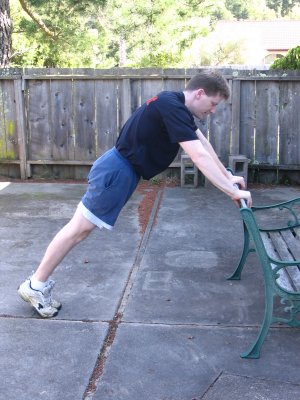
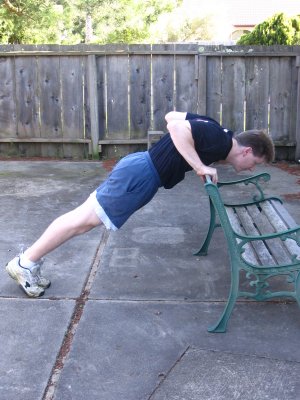
Push-ups can range in difficulty from very easy to so difficult that few people can do them. Adjusting the difficulty level is simply a matter of changing hand placement and body level to alter leverage and load. Keeping the body upright and the hands in line with the shoulders scales the pushup for people who are just beginning their fitness journey. Placing the feet high and moving the hands lower, toward the hips, increases the loads dramatically and can challenge world-class athletes.

Decline push-up

To do push-ups with little or no resistance, start in a standing position, arms-length from a wall. Extend the arms in front of you at shoulder height to place your hands on the wall slightly wider than shoulder-width. These push-ups (or, more literally, push-outs) are appropriate for beginners and those who are rehabilitating injuries. With the body almost completely vertical, these can be used to restore and build mobility in the arms and shoulders, to teach the plank body position, and to work toward a horizontal push-up on the floor. Even with this simple movement it is important to keep a rigid body and full range of motion (ROM). Each rep should bring the chest and face as close as possible to the wall and finish with the arms completely straight and the shoulders fully extended. The degree of difficulty can be additionally fine tuned by adjusting the distance of the feet from the wall. Obviously, the farther out they are - and the more acute the angle of the body - the more difficult they will be.

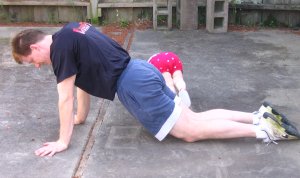
Knee push-up

Knee push-ups are another beginning push-up that starts flat on the ground, with the body supported by the hands and the knees (rather than the toes). Again, the body should be kept rigid and full ROM performed, with the knees as the fulcrum of the movement. Be sure to avoid the tendency to pike at the hips and stick out the butt; shoulders hips, and knees should always be aligned.
knee push upknee push up

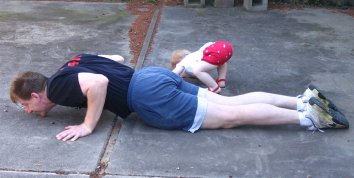
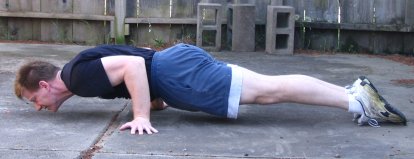
Push-ups

Push-ups should be performed flat on the ground, supported only by the hands and feet. Do not arch the back (swayback) or pike (push your butt up in the air). Each push-up should contact the floor with the chest at the bottom and extend to a high hollow support with straight arms and actively extended shoulders at the top.

Clap push-up

Clapping the hands together at the top of the movement makes push-ups a very dynamic athletic movement. The clap forces you to push aggressively to get your hands off the floor. Adding a chest slap or clapping behind the back will further increase the dynamic requirement.

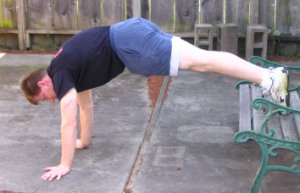
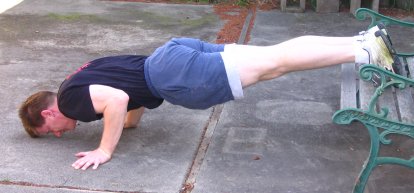
Incline Push-up

Moving the feet onto a raised surface increases the load on the arms. Raising the platform gradually is an excellent way to progress toward handstand push-ups.
incline push upincline push up

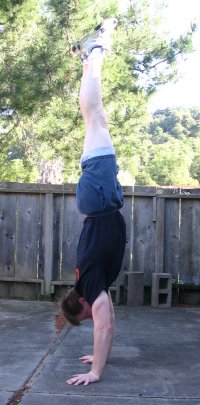
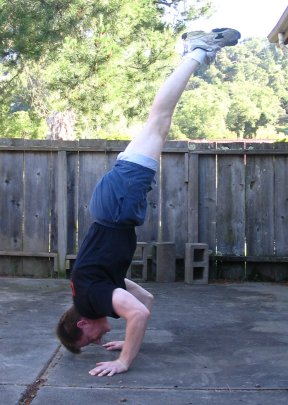
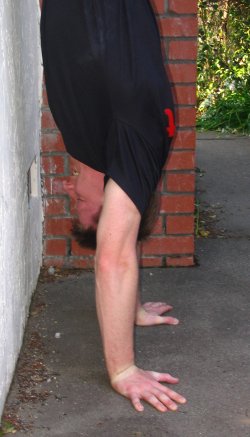
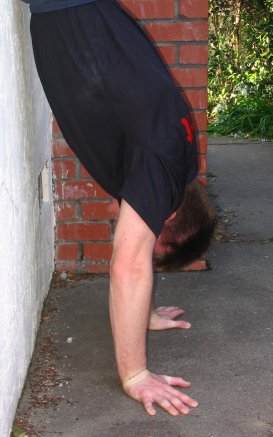
Handstand push-up

The first full bodyweight push-up. An individual should be able to hold a 20-second handstand against a wall with shoulders fully extended before attempting handstand push-ups. You can start with your feet against a wall to remove the balance requirement; practice these both facing the wall and with your back to the wall. Maintain a good straight, tight handstand position at all times. Once you can perform five to ten reps on the wall consistently, begin working them without a wall. Freestanding handstand pushups are an incredibly powerful stimulus, as they require rapid firing of shoulder stabilizers while maintaining a relatively heavy and dynamic load.
handstand push uphandstand push up

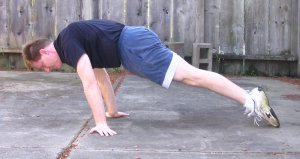
Pseudo planche push-up

Start with a standard push-up, but move the hands farther back under the body toward the hips, which increases the load on the arms. As you get closer to placing your hands directly under your hips, you will notice your feet beginning to slide on the floor. This is an indication that little of your weight is being supported by your feet. Eventually your feet will be able to come completely off the floor - though this will take most people years to accomplish.
pseudo planch push uppseudo planch push up

Handstand shoulder shrugs

This is an excellent drill to you learn to activate your shoulders. With a spot or against a wall, get into a handstand. Then, shrug up and down using only your shoulders. Keep your arms completely straight, and try to achieve as much movement as possible in your shoulders.
handstand shoulder shrughandstand shoulder shrug

Core

"Core strength" has become a marketing term for numerous commercial fitness programs. The great majority of these programs, however, are focused on developing a "six-pack," not on developing a strong, functional core, and they are often inadequate even for that goal. Torso strength and stability are crucial for athletic endeavors. Having the ability to keep your midsection tight and to powerfully alter midsection positioning improves your power output and control in almost all functional and athletic movements.

Sit-up

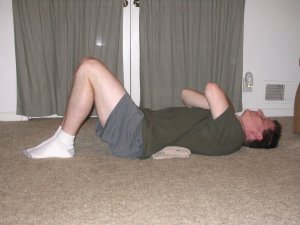
Good old-fashioned sit-ups are an excellent way to strengthen the abs and hip flexors. There is some lack of the functionality in the sit-up movement on totally flat ground, as a flat surface does not allow most people�s abs to properly engage at the beginning of the movement. A rolled-up towel, or one of the commercial products designed for this purpose (such as an AbMat) can be placed under the lower back to avoid this limitation.
Sit-ups can be done with the feet anchored or not. Having the feet anchored generally increases the rate at which sit-ups can be performed, which intensifies the metabolic demand but also shifts the recruitment more to the hip flexors. To take the hip flexors out of the movement and require the abs to do the work, put the soles of your feet together, with knees splayed out to the sides, an AbMat or similar support under your lower back, and roll smoothly up into a fully upright sitting position, with no jerking in the motion.
To change the load on sit-ups, you can do them on an incline or decline, similar to push-ups. You can also alter your arm position to adjust the difficulty of the movement. Keeping the arms by the sides is easier, while keeping both arms straight overhead, by the ears, is more difficult. Holding weight at the chest or overhead further increases the demands.
sit upsit up

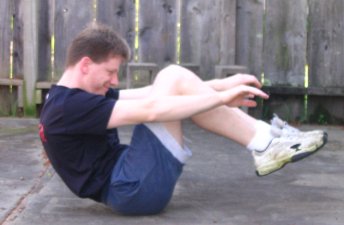
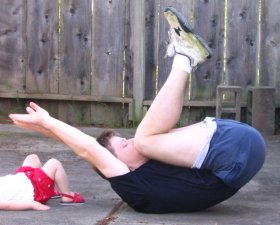
N-up

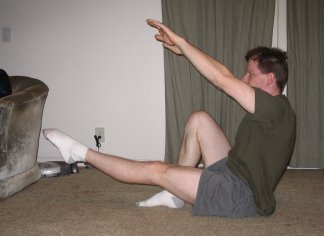
An N-up is a sit-up type movement in which the upper body and legs come together into a tuck. At the top point of this movement, you will be sitting, with only your butt touching the ground, knees to the chest, and torso upright.
n upn up

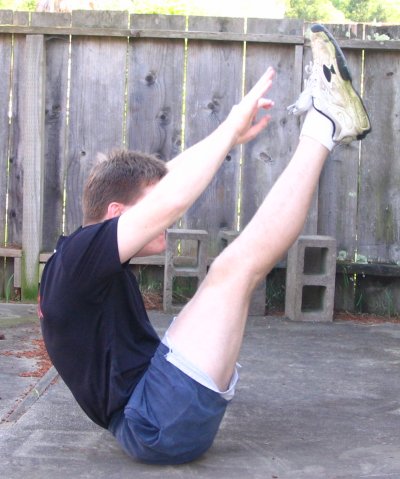
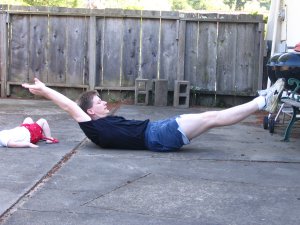
V-up

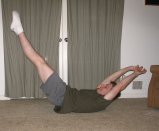
A V-up is like an N-up except that the legs are kept straight throughout the motion and the arms are extended straight overhead throughout the movement. Aim to be fully extended at the bottom and completely compressed at the top, with chin to shins and fingers to toes.
v up

Tuck-up

Lie on your back and then lift your knees toward your chest aggressively so that you roll back into a tuck with your lower back off the floor.tuck uptuck up

L-sit/V-sit

L-sits can be performed on the ground, with legs extended straight in front of you and hands flat on the floor on either side of the legs. This requires a conscious effort to push the shoulders down to lift the body high enough to perform the L on flat ground. You can also do a straddle L, with hands on the ground between your legs. Progressions to the L-sit are discussed in Parallette Training - Volume 1.

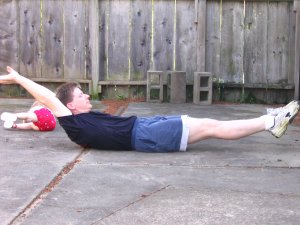
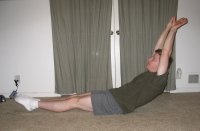
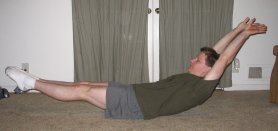
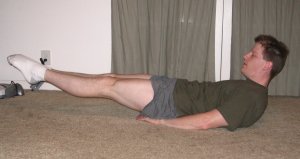
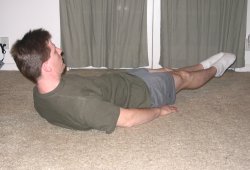
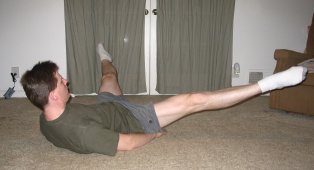
Hollow rock

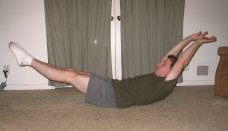
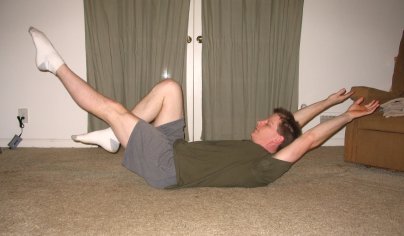
The starting position is lying on the back in a hollow. A hollow position for this purpose is one in which the pelvis is turned under (i.e., tail tucked), legs are lifted slightly off the floor, lower back is touching the ground, head and shoulders are lifted slightly off the floor, and arms are held by the ears, off the ground. From this position, rock smoothly back and forth, keeping the body tight, the hip angle constant (no piking of the hip), and the lower back rounded. Any thumping in the motion shows that the hollow position has been compromised, which indicates that the trainee�s abs are not strong enough to keep the pelvis turned under in this position. Continued training will alleviate this deficiency.
hollow rockhollow rock

Hollow hold

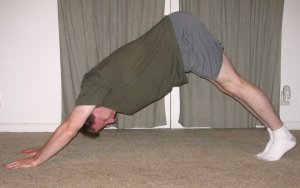
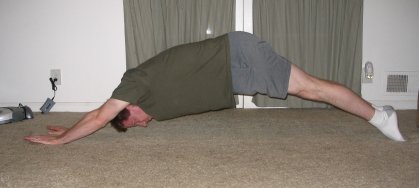
Start in a push-up position. Then slide your hands forward until you are in an extended hollow position with just your hands and feet on the floor. When first starting this exercise, it is OK to pike significantly, keeping your butt high in the air. The key is to get the shoulders completely open. Once this position has been obtained, you can begin to extend your hips and approach an open hollow position. As you build strength in this position, point your toes so that you are supported on the top of your feet. A rolling device can be connected to the hands and/or feet to increase the demands and to allow for movement in and out of the position.
hollow holdhollow hold

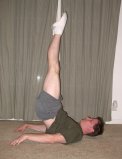
Advanced leg lift

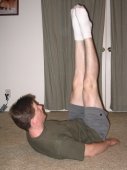
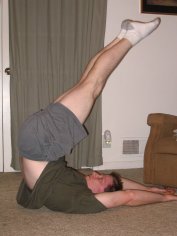
Start by lying on your back with your legs straight. Place each hand on the floor, palm down, just under each respective gluteus. While keeping hollow and looking at your toes, lift your legs. Just before your legs reach vertical, extend your torso should to lift your lower back off the floor. The top point of this move is the position known as a "candlestick."
advanced leg liftadvanced leg lift

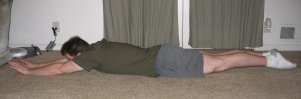
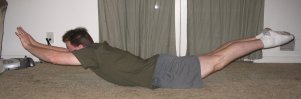
Arch-up

Start by lying on your stomach on the floor. Lift your legs and chest off the floor then return to a prone position. Make sure your heels are squeezed together throughout and your legs are kept straight, as this increases the demand of the movement.
arch uparch up

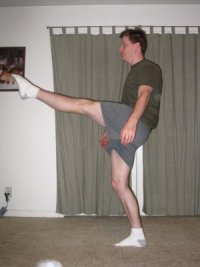
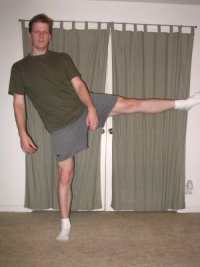
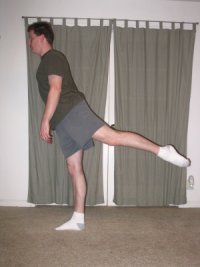
Standing leg lift

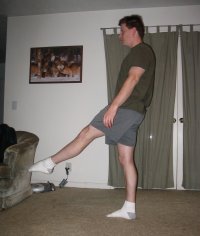
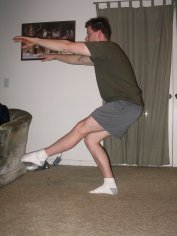
Hailing from ballet training, standing leg lifts strengthen hip muscles while increasing active ROM. Start standing, either holding onto a stable object or freestanding. Then lift one leg as high as you can (keeping base leg straight ... not like photo..). Keep the lift controlled and at a moderate pace so it is a lift, not a kick. Keep both legs straight the whole time, and the torso aligned. Do not lean in any direction. The leg lift can be performed to the front, to the back, and to the side.
standing leg liftstanding leg liftstanding leg lift

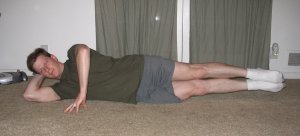
Side conditioning

Start by lying on your right side, using your left hand on the floor in front of you for balance. From this position, lift your legs and shoulders simultaneously and then return to the start position. Repeat on the left side.

Arch rock to hollow rock

Lie on your back in a hollow position, perform a few hollow rocks, and then roll sideways onto your stomach, without touching the ground with either your hands or your feet. Then perform a few arch rocks and roll, again without hands or feet touching the ground, back onto your back. This sequence can be repeated to cover distance, or back and forth in a small area.

Leg lift straddle-down

Start on your back in a hollow and lift your legs to vertical, then straddle both legs out to the sides and swing them down to the start position. Then reverse the motion, straddling the legs in the hollow, bringing your legs up to vertical, and then lowering them, feet together, to the start position.
leg lift straddle downleg lift straddle downleg lift straddle down

Rear leg lift

Start lying on your stomach. Lift one leg up the back as high as you can and return to the start position in a controlled movement. Legs should be kept straight throughout.
rear leg lift

Hip adduction

Lie on your right side and lift your left leg as high as possible and return to start position. Keep both legs straight throughout. Repeat on left side.

Hip abduction

Lie on your right side with your right leg on the floor and extended in line with your body, and your left leg bent, with the left foot on the floor in front of your hips. Then lift your right leg as high as possible (inner thigh toward the ceiling) and return to the start position in a controlled movement.

Squats, jumps, and sprints

You can't be a CrossFitter for long without learning the fundamental importance of frequent, well-executed unweighted squats (detailed in CrossFit Journal issue 4). There are numerous no-equipment variations that build on that foundation.

Pistol

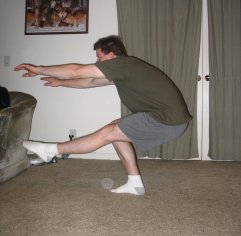
A single-leg squat. While holding one leg out in front, perform a full squat with the other leg. This movement will be quite difficult and will require assistance for most people at first. Holding onto a stable object will allow you to perform the movement properly and gradually wean yourself of the support. A stretch band or stretch tubing can also be used for assistance. With the stretch band secured to an object overhead (such as a pull-up bar, for example), you can grab the band with one hand for stability and support. As you get stronger in this movement you can grab the band at a lower point to reduce the assistance or use a lighter-weight band. As with regular squats, pistols can be performed with a jump at the end, including a jump onto a raised surface.

Pistol roll

Starting from a stand on one leg, squat down, roll onto your back into a candlestick position (high on your shoulders with both feet pointed toward the ceiling), and then roll forward to single-leg stand again. The raised foot will never contact the ground. It is important to maintain proper squat technique as you squat and return to standing. Many people will try to lean forward over their foot and allow their heel to rise off the floor, which can lead to injury.
Pistol RockPistol RockPistol Rock

Squat jump

Perform a squat and then explode upward to jump as high as you can. This is a very aggressive, dynamic movement. This should be performed only by trainees who have a good bodyweight squat, since doing squat jumps improperly can be hard on the knees. Increase the challenge and motivation by jumping onto a raised object. The height of the object can be increased incrementally as your power improves.

Sequence jump

Bound across the ground in a series of two-footed jumps, making each jump as explosive as it can be and minimizing contact time with the ground. Think of punching through the ground with your legs. Actively anticipate the ground and start driving with your legs slightly before impact, so that you bounce immediately into the next jump. Objects or lines can be used to set targets or a course and to make the movement a challenge or competition. This exercise should not be performed on pavement because of the impact involved.

Short-distance sprints

Repeated short-distance sprints are an excellent training modality. The metabolic demands are high and the loads on the legs are limited only by the trainee�s motivation. Place two lines 12 to 30 meters (40 to 100 feet) apart. Sprint from one line to the other, rapidly changing direction at the line. To add variety, add another movement at each line, such as a push-up, v-up, or any other exercise.

General movements

Burpee

To do a burpee in its most basic form, start from standing, squat with your hands on the floor, and jump your feet back to put you in a prone position with straight arms (as at the top of a push-up). Then bring your legs forward into a squat again and return to standing. This basic version is also sometimes called a squat thrust. Several modifications can be made to the burpee to increase its demands: add a push-up in the prone position, add a jump at the end as you return to standing, perform the burpee under a bar and jump up to do a pull-up in each rep, etc. Be creative with burpees and see what variations you can come up with.

Jumping Jack

Most people have done jumping jacks in a PE class at some point. They are an excellent way to warm up, and they can be included in a conditioning set either as a station where fatigued muscles are allowed to recover while metabolic demands are kept high, or as a significant component of a metabolic conditioning circuit. Jumping jacks should be practiced both with arms and legs in concert (legs straddling while arms are swung upward) and in opposition (legs straddling while arms are brought down).

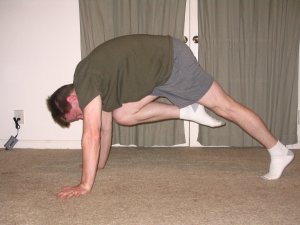
Mountain climbers

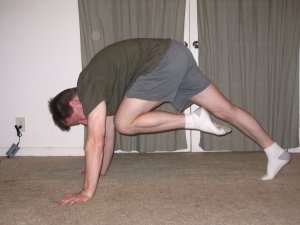
Start in a prone position with hands on the floor and arms straight, as if at the top of a push-up. Then pull each knee in to your chest in a rapid alternating pattern.
Mountain ClimbersMountain Climbers

Handstand and press handstand

Handstand and press handstands are excellent exercises for developing strength and kinesthetic awareness. Technique and progressions are described in depth in CFJ issues 17 and 43.


By Roger Harrell.