Search This Blog

Sunday, 10 November 2013

How to become an exercise addict

By Amanda MacMillan

We all have friends who, despite hectic schedules, never miss a day at the gym. Who can't stop talking about the next 10K. Who can't stop smiling after yoga class. Sure, they’re a little, well, obsessive about working out. But we envy them! The good news is we all have the potential to become fitness-obsessed, says Tom Holland, a Connecticut-based celebrity fitness trainer, exercise physiologist, and expert in sports psychology. Here are 20 proven ways to make exercise a habit.
Get up earlier
Right this minute, go set your alarm and lay out everything you need for your morning workout. (Switch on a lamp as soon as your alarm goes off, says fitness blogger Tina Haupert, so you wake up faster.) Working out at the same time every day may help you improve more quickly, a study from the University of North Texas found, and other research has shown that people who exercise in the morning are more likely to stick with their workout than those who exercise later in the day. After all, if you get your sweat session out of the way first thing in the a.m., you won't miss out if unexpected distractions come up later in the day. (And while we're on the subject, skip the snooze button: Research suggests that those extra few minutes in bed may actually make you more tired.)
Give it six weeks
There's an urban legend that it takes 21 days for something to become a habit, but there's little evidence to back up this claim. For exercise, it's probably more like six weeks, says Rebecca Woll, manager of personal training at Equinox in New York City. "This is when you start to see aesthetic changes in your body," she explains. "Once you see these changes you won't want to go back to the old you!" This is also about the time you'll start to notice the difference in how you feel if you miss a day or two of exercise, and you'll start to appreciate the natural high that comes after a good workout.
Find your niche
So you tried spinning and you hated it, or you hurt yourself on your first day of CrossFit. That doesn't mean that all forms of fitness aren't for you—so get back out there and try a different one. "Find something that makes you tune out and gives you a release from your daily grind," says Woll—whether that means focusing on the ground ahead of you on a trail run, or following the instructor in a Zumba class. "You'll know you found it when you look at the clock and an hour flashes by without you noticing." Holland agrees: "I always tell my clients, 'I don't exercise,'" he says. "I'll go for a run or go to the gym, but I don't think of it as exercise because that suddenly gives it a negative connotation."

Hire a trainer
Whether you're a total newcomer to the fitness scene or you just need a little motivation and guidance, a personal trainer can help you set goals and develop a plan to make them happen. "People think they can't afford it, but they don't realize that even just one or two sessions with a trainer can be so beneficial," says Holland. "Investing just one or two hundred bucks can go a long way." Plus, a good trainer will also hold you accountable and will motivate you to work your hardest, Holland adds. "It's all about positive reinforcement and being there for the client when they need it."

Join a club
Working out is more fun with friends—and it's a lot harder to bail on when you've got other people relying on you. "I think that's why groups like CrossFit and Weight Watchers are so successful," says Holland. "It shows the value of the support system, which should be an integral part of any workout plan." Your exercise club could be an entire gym full of people, a regular fitness class where everyone knows your name, or just one exercise buddy who makes sure you're out of bed to meet her for your morning walks. Feeling ambitious? Start a fitness or weight-loss contest with your friends or coworkers, suggests Woll. "A little healthy competition always gets you motivated!"
Make it convenient
Think about when, where, and how your workout can best (and most easily) fit into your daily routine, says Woll. "You don't want to travel far to get to a gym," for example, she says, "or the likelihood of going will decrease immensely." For some people, a gym near the office will help them squeeze in a workout before work or during their lunch break; for others, working out at home or at a gym near their house is more convenient. (And don't forget about where you'll work out on the weekends!) Plan ahead to make sure you can get everything you need—like clothes and shower supplies—to and from your workouts. Or take a tip from Haupert, who rented a locker at her gym so she could keep her things there all week long.

Become a groupie
The right teacher can make a fitness class feel more like a party than a workout, whether it's Zumba, spinning or cardio kickboxing. "Finding an instructor is like dating," says Woll. "If the first one doesn't work, keep looking. This person should make you want to come to the gym!" (Just be ready for some competition: Popular fitness instructors see their classes fill up fast, and maintain loyal followings even when they switch class times and locations.) You can even glean workout inspiration from celebrity instructors and trainers. Even if you've never met them in person, following your fitness idols on Facebook, or reading their advice in magazines can all be powerful motivators to follow their examples.
Pay for it
"Being accountable with money is a good thing," says Holland, "If you invest in a fitness regimen, you're more likely to work harder to get your money's worth." (He's learned that when he gives away training sessions for free, his clients aren't nearly as motivated.) If you can afford it, joining an upscale gym or splurging on boutique fitness classes could be just the thing you need to force yourself to actually go. Or, bribe yourself with smaller investments—treat yourself to a new pair of running shoes or a new GPS watch, for example.

Don't overdo it
One way to put a stop to your new exercise habit before it even gets off the ground? Getting hurt. Beginners (or people just returning to fitness after a long break) need to be careful about trying to do too much, too soon, which can leave you sore and exhausted—or worse yet, with a real injury that will keep you sidelined for even longer. It's normal to have some muscle aches and stiffness a day or two after working out muscles you haven't used in a while, but if you start to feel sick or overly tired, you could be training too hard. Following a training plan or working with a personal trainer can help you make sure you're progressing at a reasonable pace.

Get techy (and social)
For some people, the feel-good side effects of exercise are enough to keep them going. Others need something a little more tangible to get themselves up and out of bed every morning. If you thrive on statistics and numbers, you may find that using apps, computer programs, or wearable pedometers and fitness trackers can help you stay on track with a new routine. Whether you're counting your daily steps or the number of calories you've burned, technology can help you challenge yourself to new personal bests every day. Plus, many of these programs can be integrated with your social networks, making it easy to let your Facebook feed know that you just ran 3 miles or checked in at the gym. Once your friends start asking you about your new exercise habits, it may be harder to let them fall by the wayside.
Hold out on yourself
Trick yourself into looking forward to exercise, by making it the only time you treat yourself to something special. Maybe it's a podcast or a playlist of songs that you only listen to you while you run, your favorite TV show that you'll only watch from the treadmill, brunch with girlfriends after yoga class, or a special dessert you only allow yourself on days you've worked out. When you associate exercise with positive experiences, says Holland, you'll start to look at it less as a chore and more as something fun and rewarding.
Count your calories
It's not directly related to exercise, but paying closer attention to what you're putting into your body can make you more aware of how you're treating it, overall. (Keeping a food and fitness diary or using a calorie-tracking app can also remind you of how a few more minutes on the elliptical can help balance out that extra scoop of guacamole.) Plus, a 2013 Stanford University study found that people who adopt a diet and exercise program together are more likely to stick with both new habits than those who tackle an individual goal by itself.
Set attainable goals
"I think the vast majority of people set the wrong goals—ones that are too ambitious or that can't be quantified" says Holland. Instead, it's important to work toward smaller benchmarks, agrees Woll—losing six pounds in six weeks, for example, or to run a 5K in two months and a half marathon in a year, she says. "Your end goals will change as you reach them, but they always need to be set." To keep yourself on track, keep your goal front and center: Sign up for a race and circle the date on your calendar, or hang up an old pair of pants that you'd like to fit back into three months from now.
Skip the gym
If getting to the gym every day isn't conducive to your schedule (or you just hate the idea of going there, period), don't force it. Thanks to workout DVDs, streaming online classes, and home exercise systems, it's easier than ever to get a great workout without even leaving your house. "A lot of people really like the idea of exercising in the privacy of their own homes, and it can be much easier to fit into a busy schedule," says Holland. Plus, when your workout is staring you in the face—your treadmill in the living room or your P90X chin-up bar hanging from a doorway—it's a lot harder to ignore.

Write it out
A 2002 British study found that when adults were told to keep track of how much they worked out over the next two weeks, those who were first asked to formulate a plan on exactly when and where they would exercise were more likely to exercise at least once a week—91 percent, versus just 38 percent of those who hadn't planned ahead. Having a schedule and figuring out the logistics ahead of time will give you fewer obstacles (like forgetting your sneakers or double-booking yourself) on the day of your workout.
Make it a ritual
The most important thing about establishing a regular routine, whether it's exercise or anything else, is to truly make it a habit—something you don't even think twice about before doing, says Holland. This will come with time, but you can help hurry the process along by creating daily rituals that center around your workout: Sip a cup of coffee on your way to the gym in the morning, roll out your yoga mat in front of the TV when you wake up in the morning, or listen to a favorite song to get you pumped up before you head out for a run. Before you know it, these cues will be signaling to your brain that it's time to work out—not time to make excuses.
Don't make it about you
Charity fitness events—runs, walks, bike rides, even mountain climbing trips—can do double duty when it comes to motivation: Not only are you training for a concrete goal, but you're also doing it for a good cause. "It can be really empowering, to know that this small thing you're doing for yourself can also have a bigger impact on other people who really need it," says Holland. Some charity-oriented fitness programs will even set you up with a coach and a training program, at no or little cost to you besides what you're required to fundraise.
Get goofy
Fitness competitions may sound pretty boring to some people; why pay money to wake up early and run around in circles, again? If a regular old 5K doesn't quite do it for you, grab some friends and sign up for something with a bit more personality. From mud runs to military-inspired obstacle courses to costumed and "color" races(which involve participants getting splattered with brightly colored paint and powder), themed fun runs are certainly having a moment. And the best part? They're all about finishing and having a good time; many of them aren't even timed, and they welcome runners and walkers of all ages and fitness levels.
Plan a (fitness-focused) vacation
"Combining vacations with exercise is a great reward, and it helps people set goals that they'll actually want to accomplish," says Holland. "Say you want to go to Italy, so you sign up for a bike tour around the country while you're there; well, now you've got to get in shape for it so you can have the best possible experience while you're there." Sign up for a destination race—the Paris Marathon, for example—or just book a trip that involves a lot of physical activity, whether it's hiking or skiing.
Skip the Tonight Show
If you're going to start getting up earlier (see tip No. 1), it's important to make sure you're still getting enough sleep (most of us need seven to eight hours a night). This probably means tucking yourself in at a decent hour, rather than staying up late watching television or sending work emails. Luckily, research has shown that working out during the day can help you fall asleep faster and sleep better, overall, so your new exercise habit may actually make this easier. To make a permanent change in your sleeping patterns, begin shifting your bedtime up 15 minutes every night and setting your alarm for 15 minutes earlier, until you've reached your goal times (say, to bed at 10 p.m. and up at 6 a.m.).

Thursday, 7 November 2013

THE 15 BEST FAT-BURNING FOODS

These are foods that start winnowing your waistline the moment they leave your fork and enter your mouth. They build muscle, promote fat burning, or simply use energy (i.e., burn calories) just to digest them! Stock up today.

BY SELENE YEAGER


Almonds and other nuts (with skins intact)
Build muscle, reduce cravings
Dairy products (fat-free or low-fat milk, yogurt, cheese)
Build strong bones, fire up weight loss
Eggs
Build muscle, burn fat
Turkey and other lean meats
Build muscle, strengthen immune system
Berries
Improve satiety, prevent cravings
Enova oil (soy and canola oil)
Promotes fullness, not easily stored as fat
Peanut butter 
Boosts testosterone (a good thing even in women), builds muscle, burns fat
Fatty fish (such as salmon, tuna, mackerel)
Trigger fullness, fire up fat burning
Grapefruit
Lowers insulin, regulates blood sugar and metabolism; be sure to eat the fleshy white membranes
Green tea
Fires up fat burning
Chili peppers
Spikes metabolism
Spinach and green vegetables
Fight free radicals and improve recovery for better muscle building
Whole grains (quinoa, brown rice, whole grain cereal)
Small doses prevent body from storing fat
Beans and legumes
Build muscle, help burn fat, regulate digestion
Whey
Builds muscle, burns fat

Wednesday, 6 November 2013

The Planks You Should Be Doing (But Probably Aren't)

Now that the plank has effectively supplanted the crunch as the go-to core-strengthener, exercisers have placed a premium on their ability to hold the toning move -- the longer, the better. As one-minute planks gave way to three-minute planks, and three-minute planks evolved into ten-minute planks, marathon plank-holding has become a calling card of sorts. But, according to Equinox experts, in terms of your fitness progression, it's an exercise in futility, as pointless as cranking out a crazy number of sit-ups.
"Being able to hold a traditional plank for 10 minutes isn't very functional for anything except just that," says Tier 4 trainer Josh Stolz. "Even Stuart McGill (a top authority and researcher of low back pain and function) recommends holding a plank for 10 seconds, tops, followed by a brief, one- to two-seconds-long relaxation of the muscles. This can be repeated a certain number of times, but the point here is that standard planking for a long period of time is not functional because muscles and fascia need to turn on and turn off."
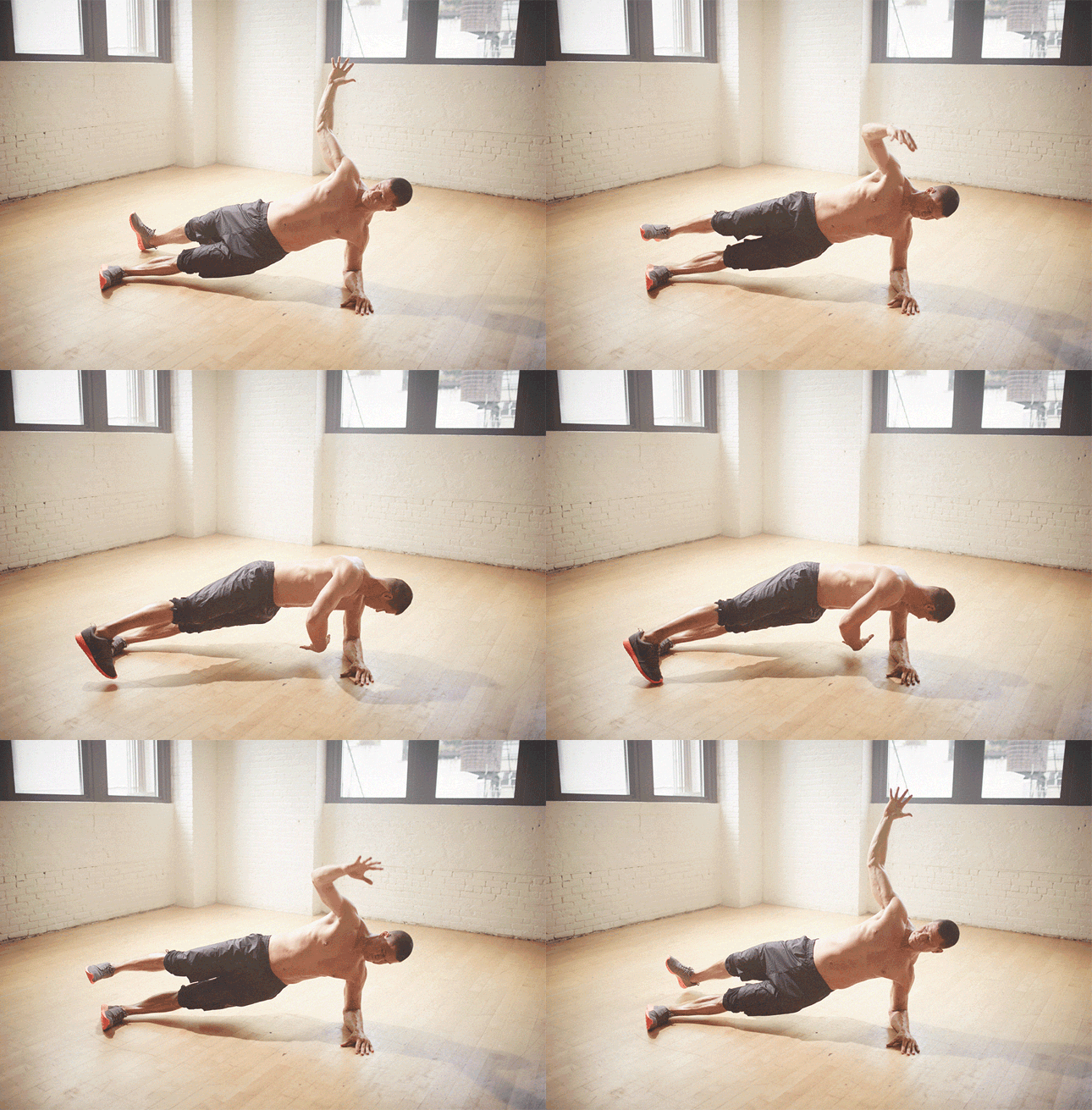
To maximize the move's payoff, you have to get things moving, says Stolz, who uses this four-move series with his clients. "The logic behind these planks is the multi-directional aspect. We move in three different planes of motion in everyday life. For example, when was the last time you got out of bed in a perfectly straight line? You probably rolled to the side, and pushed yourself up with an elbow. The body is designed to function synergistically to conserve energy and allow us freedom of movement."
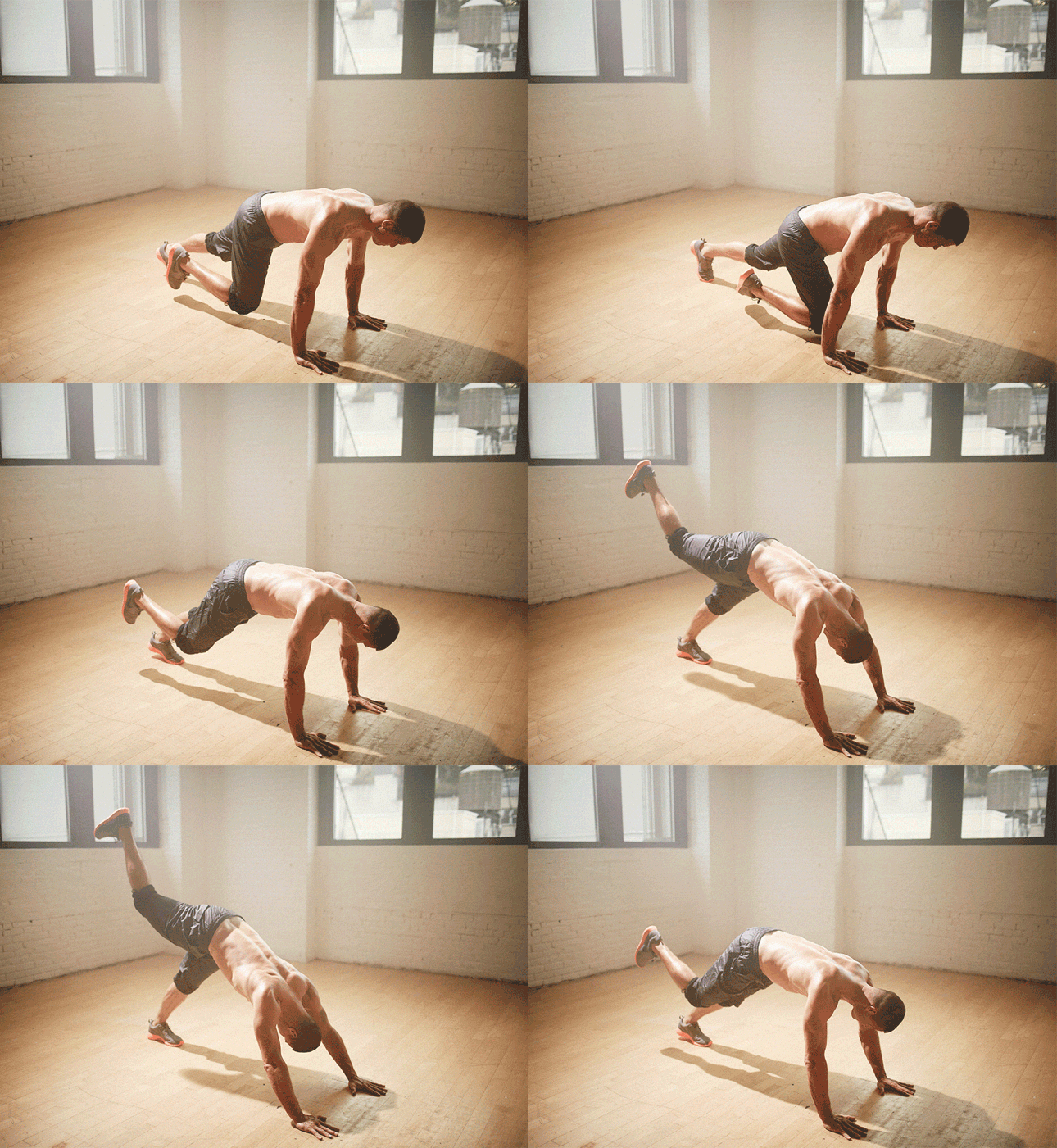
Plank With Leg Flexion and Extension
2013-10-15-plank04.gif
Get into standard plank position, hands directly beneath shoulders, but lift right leg off of floor. Drive right knee towards hands, then drive right heel towards ceiling, forming an upside-down V with your body, keeping a straight line from heel to your head. Do 3 to 5 reps; switch legs and repeat.

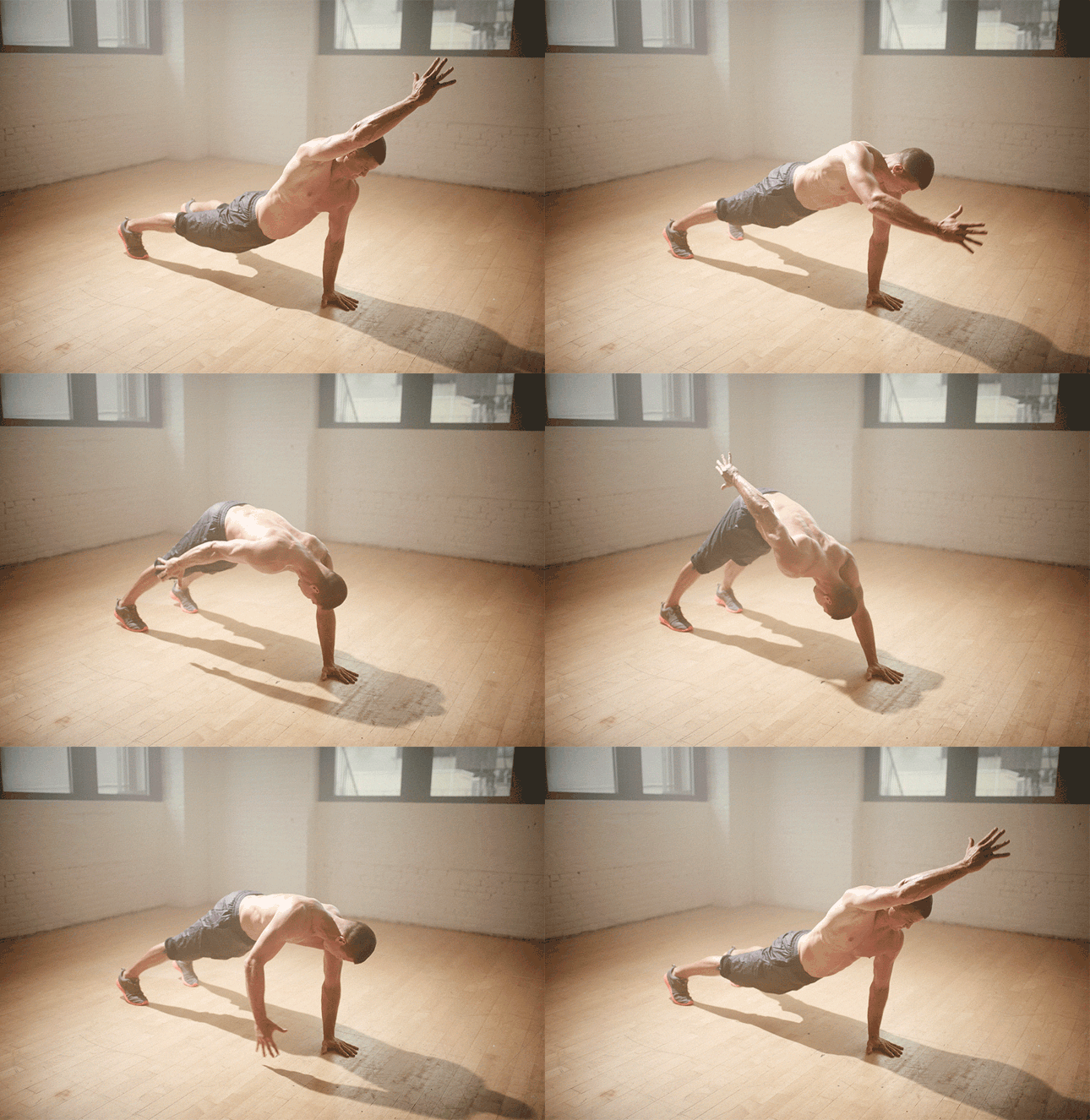
Plank With Arm Flexion and Extension
2013-10-15-plank07.gif
Get into standard plank position, hands directly beneath shoulders, and lift right hand off ground. Lower hips towards ground, driving extended right arm forward, then drive hips upwards towards ceiling and drive extended right arm directly behind you, so that feet are flat and head points downwards, forming an upside-down V with your body.

Plank With Arm Rotation
2013-10-15-plank10.gif
In standard plank position, hands directly beneath shoulders, rotate hips to the right as you bring extended right arm up to shoulder height, then rotate hips to the left as you drive right hand beneath and across your torso. Do 3 to 5 reps; switch arms and repeat.
Instead of preparing you to compete in a plank-holding contest, Stolz's series uses the move to strengthen you in a balanced way, making you fitter for movement not just through exercise, but through the various activities and efforts you make each day. "These planks combine mobility and stability, also known as 'mostability,' to better prepare us for function," says Stolz.
And by incorporating other body parts, Stolz elevates the exercise from core-strengthener to total-body power-endurance move. "I consider these planks a full-body exercise, because I'm moving either my hips, arms or legs and trying to control or stabilize the rest of my body. Of course you feel them in the core, but I have clients who also report feeling it in the glutes, obliques, back and shoulders."
Since each 3-part plank becomes progressively more difficult -- you'll advance from adding hip movement, to adding arm movement, to adding leg movement, then to adding both arm and leg movement -- Stolz advises working them into your regular routine based on your fitness level. "The routine can vary greatly depending on the level of the member," he says. "For many of my clients, I use the planks as either a warm-up or activation, or I throw it right into the workout as part of a circuit. These can be done every day, but it's important to know where to start."
Photography by Photography by Mike Rosenthal; Photo Directior & Stylist: Ashley Martin; Grooming: Clelia Bergonzoli

Monday, 4 November 2013

Man Lost 13 Stones On Diet Of Mushy Peas

A SLIMMER has dropped 13 stone in weight - with help from a diet of mushy peas.

A SLIMMER has dropped 13 stone in weight - with help from a diet of mushy peas.
Nightclub boss Robert Matthews has gone from 31 stone to 18 stone in a year since swapping fatty foods for peas three times a day.
The dad-of-one, 42, combined his diet with surgery to fit a gastric band to shrink his stomach.
He said yesterday: "I had been through every diet that existed but nothing worked.
"I was eating huge takeaways all day, every day and I would eat up to 15 bags of crisps while I sat in the club.
"When I went out with friends I would order dozens of starters.
"It makes me cringe when I look back at it. But now I've swapped my huge appetite for mushy peas and it's worked a treat."
Robert used to eat in restaurants virtually every night and often pigged out on dozens of starters before a large main course and pudding.
All of his XXXL clothes had to be shipped from the US because he was unable to find his waist size in Britain.
He spent years eating six meals a day such as pies, kebabs and burgers, washed down with pints of Guinness.
But Robert decided to change his lifestyle after a holiday in Barbados last summer when he went diving in the sea - and needed three friends to haul him back on board the boat.
He said: "I would have a fry-up, then a bacon sandwich, a pasty, two Chinese takeaways, a kebab and then a burger on the way home. I was eating continuously through the day. I don't know how I survived.
"I couldn't live like this for the rest of my life. I was eating myself into an early grave."
Robert, from Penzance, Cornwall, paid £14,000 for a gastric band to be fitted to make his stomach the size of an egg cup.
He had 75 per cent of his intestine removed and was ordered to eat three small meals a day because his stomach is unable to digest anything bigger.
Robert said: "The operation was dangerous but I got through it and it's givenme a new lease of life.
"I dropped a stone in the first week and since then the weight just dropped off. I can eat only three little meals so I've been feasting on mushy peas.
"The weight has just dropped off. Now I walk and cycle everywhere. It feels great to be a normal size again."
MUSH BETTER
AN average 200g bowl of mushy peas has just 172 calories and 1g of fat.
MEN would need to eat 14 and a half bowls of mushy peas per day to get their recommended daily allowance of 2500 calories.
WOMEN would need to eat 11 and a half bowls each day to get their daily 2000-calorie allowance.
MUSHY peas are made from dried marrowfat peas soaked overnight in water and bicarbonate of soda.
Then they are simmered with a little sugar and salt to form a lumpy soup.
ONE bowl of mushy peas forms one of your five a day portions.
A 300g tin of mushy peas costs from just 19p for supermarket own brands.
ONE bowl of mushy peas provides 12 per cent of your recommended 18g of fibre per day.
WHEN US President George W Bush made an official visit to Britain in 2003 he and then PM Tony Blair had mushy peas with their fish and chips at Blair's local pub the Dun Cow Inn in Sedgefield, Durham.
SOMETIMES mint sauce is added for extra flavour.

Sunday, 27 October 2013

Captain America workout

Chris Evans – Captain America workout


Chris Evans transformed his physique to play superhero Captain America in this summer’s blockbuster movie. Here’s how he did it.


Chris Evans is no stranger to breathing life into comic book heroes, having previously starred as Johnny Storm in theFantastic Four movies. But for the American actor’s latest role as the eponymous hero of Captain America: The First Avenger, he had to transform his physique into something as close to the perfect human specimen as possible.

‘The studios had a very specific idea about how they wantedChris to look,’ says Evans’s personal trainer Simon Waterson, the man also behind the radical transformations ofDaniel Craig as 007 and Jake Gyllenhaal as the Prince of Persia. ‘My brief was to build Chris a strong, big and lean body that was realistic, functional and in proper proportion. In the movie, his character is physically transformed into the perfect soldier specimen so he had to look the part.’

The plot of Captain America: The First Avenger seesEvans play Steve Rogers, a sickly young man who tries to enlist in the US Army in 1943 to fight the Nazis but is deemed physically unfit. He instead volunteers for Project: Rebirth, a secret military operation to aid the US war effort that uses a serum to convert him into the peak of human perfection and become the super-soldier that is Captain America. He is then deployed to bring down Hitler’s treacherous head of advanced weaponry, the Red Skull, played by Hugo Weaving.

Under Waterson’s guidance Evans increased his weight from 77kg to 82kg, while reducing his body fat percentage 
from 12.5 to just eight per cent.

To help Evans add lean muscle mass quickly, Waterson gave the actor a training regime based on high-weight/low-rep sets of the classic compound lifts, specifically squats, deadlifts, incline bench presses and weighted dips and chin-ups.

‘He also did a lot of bodyweight moves and included some plyometrics to fire up his fast-twitch muscle fibres, such as squat-to-box-jumps,’ says Waterson. ‘The aim was to keep his heart rate high throughout the workouts. I didn’t want to ignore this aspect of fitness because once filming started Chris was effectively going to have to work out on camera during the action scenes while wearing a 6kg costume as well as carrying a helmet and shield.’

Adding serious muscle while cutting fat is one thing, but doing so while managing not to injure a Hollywood leading man put additional pressure on Waterson to deliver the ideal leading-man physique.

‘Chris had done some weight training before, but as with a lot of guys it had been focused on the vanity muscles of the chest, arms and abs,’ says Waterson. ‘These guys are always amazed when I point out that they have muscles on the backs of their bodies too. But Chriswas great to train. He understood the importance of a balanced physique. I had to work him hard but at a sensible pace – I couldn’t afford to have him sidelined for four weeks with an injury.’

The transformation didn’t come easy – Evans especially hated leg training. ‘But then who loves training legs?’ says Waterson. ‘Because if you are doing it properly it is the most painful session there is. Legs never hurt just for a day afterwards – it always lasts into the week. But your legs and glutes are the biggest and strongest muscles in your body so you must train them hard to get bigger and leaner everywhere else. So many men ignore legs because they want big arms, but pushing your lower body to the limit will transform your upper body faster than anything else thanks to a big growth-hormone response.’

‘The biggest challenge for Chris was eating enough to put on muscle but avoid storing any excess energy as fat,’ says Waterson. ‘We relied on low-carb protein shakes in between meals and snacks such as fruit and nuts. I also had him take branched-chain amino acids (BCAA) throughout the day to reduce muscle tissue breakdown and encourage growth. The aim each day was about 2g protein per kg of bodyweight.’

You too can get a superhero body with Evans’s legs workout and Waterson’s nutrition tips.

Captain America's legs workout
‘Pick a body part and hit it hard,’ 
says Waterson, ‘then give it 
time and nutrients to recover: 
fatigue, feed then leave – it’s really that simple.’ Perform one warm-up set for each exercise, then do three 
sets of six to eight reps at your eight-rep max.

1 Squat
2 Lunge
3 Leg press
4 Calf raise
5 Hamstring curl
Captain America's nutrition plan
Breakfast 

Bowl of porridge with dark berries and walnuts
Morning snack 
Protein shake and 5g BCAA
Pre-workout snack
Apple with almonds
Post-workout snack
Protein shake and 5g BCAA
20min later 
Chicken salad with brown basmati rice
Afternoon snack 
Protein shake
Dinner
Lean protein, such as fish, chicken or beef, with vegetables. No starchy carbs.

Thursday, 24 October 2013

Exercise is important even if it burns few calories

Why Exercise Is Important for Weight Loss

Diet and Weight Loss Tutorial

Just as a car runs on gasoline, our bodies run on the blood sugar (glucose) circulating in our bloodstream. When we exercise enough to deplete the supply of blood sugar, hormones are released that instruct our fat cells to release fat into our bloodstream. The fat circulates to the muscles that need it for fuel, and we end up with less fat on our bodies.

The Right Reason to Exercise

Exercise plays an important role in maintaining a healthy body, and it makes it possible to create a calorie deficit and lose weight without starving your body and slowing your metabolism. But do not look to exercise as your sole method of weight loss.
Think how many times you've heard someone say, "I'll have dessert and work it off later." As our calculators will show you, that dessert can equate to hours of exercise -- something you're not likely to actually do. Better to eat well in the first place.
Eat healthy foods in reasonable quantities and exercise regularly to maintain good health, and your body will find a healthy weight naturally.

Categories of Exercise

Exercise is frequently divided into two categories, both of which burn calories:
  1. Aerobic exercise, also called cardiovascular exercise or simply "cardio," causes you to breathe harder and increases your heart rate.
  2. Performed on a regular basis, activities such as running and swimming improve both your respiratory capacity (lungs) and your circulatory system (heart and blood vessels).
  3. Strength building, also called resistance training, increases the proportion of muscle on your body. Examples include weight lifting with free weights and using a machine with variable resistance.
  4. Because muscle is a metabolically active tissue, the more muscular you are the higher your metabolism will be. This means that you will burn more calories even at rest.

Exercise Regularly

People who exercise on a regular basis not only lose weight more effectively, but are more successful at keeping it off. And the significance of regular exercise goes beyond the physical benefits.
Regular exercise produces a mental attitude of self-care and self-esteem that bolsters confidence and the desire to continue to improve.
The health benefits of regular exercise are significant and include reduced risk for heart disease, stroke, osteoporosis and diabetes. Even just walking on a regular basis is of great value. Exercise also helps to reduce stress, anxiety and depression, which can be brought on by dieting itself, and can lead to overeating.
As explained in What It Takes to Lose It All, dieting often causes you to lose muscle and your metabolism to slow. Not only does exercise burn calories, but exercise -- especially cardio -- causes your metabolism to remain elevated for a period of time after you finish exercising. And strength building exercise builds muscle, which helps to keep your metabolism elevated 24 hours a day.

Yo-Yo Dieting without Exercise

Yo-yo dieting gets its name from the cycle of bingeing, then dieting to lose the weight gained bingeing, then repeating the cycle again and again. Yo-yo dieters typically gain weight over time, and yo-yo dieting without exercise only compounds the problem.
Without exercise, yo-yo dieters lose both muscle and fat during the diet phase, while they gain only fat during the binge phase. Over time, the proportion of fat making up their bodies becomes greater and greater, while the proportion of muscle becomes smaller and smaller.
This results in a significant slowdown of their metabolism, making weight loss more and more difficult.

Getting Started -- Slowly

Have you ever seen an obese person "busting a gut" on their first day at the gym or track? And maybe you saw them a second day, but not a third? Or maybe something similar has happened to you? Take baby steps. Maybe just walking at first. With time you will build your strength, endurance, and confidence.
You can challenge your body to improve by exercising just outside your "comfort zone." Then, when what you're doing is no longer a challenge, you can do a little more or do it a little harder, faster or longer. But forget about the old saying, "No Pain, No Gain." If you hurt, you won't get off the couch!
When you work your muscles, you may feel a little soreness the next day. This is called "delayed-onset muscle soreness" and it is especially common when you first begin exercising. Stressing your muscles causes microscopic tears to their fibers, and this causes the soreness. The good news is that as your muscles heal they become stronger.
If you experience any other type of pain, stop or see a doctor. Our bodies do a wonderful job of telling us when we are abusing them. The problem is, exercise can be so addicting that we sometimes don't want to stop and listen.

It's Natural

The human body was designed to be active, and the modern conveniences that make life so easy work to our detriment. If you have a desk job, fight back! Take the stairs instead of the elevator, go for a walk during your lunch break, and walk the last few blocks to work.
Calculate how many calories you would burn if you went for a half-hour walk a few days a week. Multiply that by 52 weeks a year and you'll be surprised at how it adds up. It can make a significant difference in your weight management and, perhaps even more important, your mental attitude and health.

Sunday, 20 October 2013

How Eating Sweet Potatoes Can Help You Lose Weight


While you may be aware of the numerous health benefits associated with sweet potatoes, chances are that you aren't aware how sweet potatoes can help you to lose weight. The high amount of dietary fiber, the low calorie content, and the high amount of water all work together to make sweet potatoes a great food if you are trying to lose weight.

High Fiber Content

One of the main ways that sweet potatoes can help you lose weight is due to their high amount of dietary fiber. Dietary fiber is important if you are trying to lose weight for a number of reasons. First, fiber is bulky, meaning that foods that contain high amounts of dietary fiber will take up a lot of room in your stomach. This helps to keep you feeling full for a long period of time, thereby preventing overeating. Next, fiber is slow digesting. This means that it takes a long time for high fiber foods to leave your stomach and enter your digestive tract. This prevents overeating, thereby reducing the chances of high calorie intake and potential weight gain. Obviously, the high fiber content of sweet potatoes plays a large part in helping you to lose weight.

Low Calorie Content

Next, sweet potatoes have a relatively low calorie content, which is also very important if you are trying to lose weight. In one pound of fat there is 3500 calories. This means that if you want to lose one pound of weight per week, you need to eliminate 500 calories from your diet each day. By using sweet potatoes, which typically contain around 100 calories per serving, instead of a higher calorie food such as white potatoes, which may contain as many as 400-500 calories per serving, you are well on your way to achieving this calorie deficiency. By using some creativity, you can definitely use sweet potatoes to help you lose weight. For example, try using mashed sweet potatoes to make pancakes instead of the traditional batter, which is typically loaded with high amounts of both fat and calories.

High Water Content

Finally, the high amount of water that is found in sweet potatoes can definitely help you lose weight, both in the long term and in the short term. With the exception of bone and fat your body is composed almost primarily from water, and therefore it is of no surprise that it responds favorably when you eat foods that contain high amounts of water. Like fiber, water takes up a lot of room in your stomach. Therefore, eating foods that contain high amounts of water, such as sweet potatoes, will make you feel full and will prevent overeating and snacking between meals. This will help both in your weight loss goals and will also help you prevent the weight from coming back on.